
Asbestos in GP Surgery Buildings: Your Legal Duties and How to Manage Them

Most GP surgery buildings constructed before 2000 are likely to contain asbestos-containing materials (ACMs). Asbestos was used extensively in UK construction until its full ban in 1999 in ceiling tiles, floor tiles, pipe lagging, boiler insulation, roofing materials, and artex wall coatings. It is not confined to old Victorian buildings. Purpose-built health centres from the 1970s and 1980s commonly contain multiple ACMs across different building elements.
Under the Control of Asbestos Regulations 2012 (CAR 2012), every duty holder has a legal obligation to manage asbestos in a way that protects staff, patients, and contractors. Failing to do so is a criminal offence. Fines have no upper limit in Crown Court. The Health and Safety Executive investigates and prosecutes asbestos breaches independently of CQC.
CAR 2012 Regulation 4 creates a legal duty to manage asbestos for all non-domestic premises built before 2000. The duty holder must: survey, assess risk, produce a written management plan, and ensure contractors are informed before any work. HSE prosecutions for asbestos breaches resulted in fines exceeding £1 million in UK courts in 2024.
Who Is the Duty Holder in a GP Surgery?
The duty holder under CAR 2012 Regulation 4 is the person responsible for maintenance and repair of the premises. In a GP surgery this is often ambiguous, and the ambiguity is legally dangerous. If the practice owns its building outright, the partners are the duty holders. If the building is leased from NHS Property Services or a private landlord, the duty may sit with the landlord, with the practice, or be shared depending on the terms of the lease. Practices in NHS Property Services buildings cannot assume NHSPS has discharged this duty on their behalf without written confirmation.
What Type of Asbestos Survey Does Your Practice Need?
There are two types of asbestos survey recognised under CAR 2012. A Management Survey (formerly Type 2) is the baseline requirement. It locates ACMs that could be disturbed during normal occupation or routine maintenance. It does not involve destructive inspection. A Refurbishment and Demolition Survey (formerly Type 3) is required before any refurbishment or demolition work. It is fully intrusive surveyors will lift floors, open wall cavities, and inspect roof voids. Any GP surgery planning a refurbishment must commission this survey before construction begins.
- Management Survey required for all pre-2000 buildings; identifies ACMs accessible during normal use; must be completed by a UKAS-accredited surveyor
- Refurbishment and Demolition Survey required before any construction or major maintenance work; intrusive inspection of all areas within the scope of works
- Asbestos register a written record of all ACMs found, their location, condition, and risk rating; must be updated after any disturbance or change
- Asbestos management plan the document describing how identified ACMs will be managed, monitored, and communicated to contractors
What Are the Most Common Asbestos-Containing Materials in GP Surgeries?
In buildings constructed between the 1950s and 1990s, the following materials frequently contain asbestos and are routinely found during surveys of GP surgery premises:
- Ceiling tiles particularly in suspended ceilings common in 1970s and 1980s health centre designs
- Floor tiles and floor tile adhesive vinyl composite tiles with chrysotile content were standard in NHS buildings until the 1990s
- Pipe lagging and boiler insulation amosite (brown asbestos) was the standard pipe insulation material before 1985
- Artex and textured coatings sprayed or trowel-applied coatings on ceilings and walls in older health centres
- Roofing materials asbestos cement sheeting used extensively in outbuildings and flat roof constructions
- Partition board asbestos insulating board was used in fire-rated partitions and door linings

What Are Your Ongoing Obligations Once a Survey Is Done?
Completing a survey discharges only the first part of your duty. CAR 2012 requires ongoing management: the asbestos register must be kept up to date; condition monitoring is required for ACMs rated as in moderate or poor condition; all contractors must be informed of ACM locations and given access to the register before starting any work. The duty holder must review the management plan at least annually and after any incident or planned disturbance.
The most common compliance failure is not missing a survey it is failing to communicate survey findings to contractors. A maintenance engineer who unknowingly drills through an asbestos ceiling tile creates an exposure incident, a potential prosecution, and a mandatory notifiable event to the HSE. The practice manager who failed to show the engineer the asbestos register is the named responsible party.

What Should You Do If You Have No Survey and No Asbestos Register?
If your practice is in a pre-2000 building and you do not have a current management survey and asbestos register, your first action is to commission a survey from a UKAS-accredited provider. Until the survey is complete, treat all materials that could contain asbestos as if they do, and do not allow any drilling, cutting, or disturbance of suspect materials. This is not overcaution it is the legally required default under CAR 2012 Regulation 4(3).
For practices in NHS Property Services buildings, request a copy of the asbestos register in writing. NHSPS is obliged to provide it. If they cannot produce one, escalate through your ICB premises lead. The absence of an asbestos register in a pre-2000 NHS building is itself a compliance breach one that is shared between the landlord and the occupier.

Related Post

Risk Assessments for GP Surgeries: What UK Law Requires and What CQC Will Check in 2026
A risk assessment for GP surgeries is a legal requirement under the Health and Safety at W…
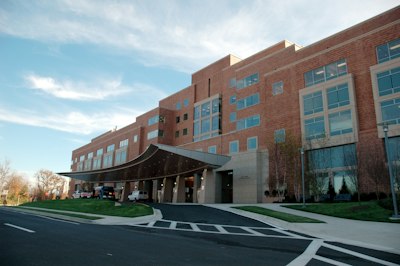
GP Surgery Premises Management: What It Covers, Why It Matters, and How to Get It Right
Half of GP practices in England are already operating from premises that do not meet their…
Surgery Premises Group
Surgery Premises Group specialises in property management, compliance, and refurbishment for GP surgeries and dental practices across the UK. Our team writes on CQC compliance, statutory risk assessments, and clinical premises renovation to help practice managers keep their buildings safe, compliant, and fit for patient care.