
Decarbonising GP Surgery Buildings: Your Route to Better EPC Ratings and Lower Energy Bills

NHS England published its Delivering a Net Zero NHS strategy in 2020, committing to reach net zero carbon by 2040 for direct NHS emissions (Scope 1 and 2) and by 2045 for the full carbon footprint including the supply chain (Scope 3). Primary care buildings including GP surgeries sit within this framework. While GP practices operate as independent contractors rather than NHS bodies, their buildings are part of the NHS estate, and the decarbonisation agenda is beginning to affect premises funding decisions, NHSPS tenancy terms, and ICB capital priorities.
For most practice managers, the decarbonisation agenda is currently abstract. It becomes concrete in one of three ways: an EPC rating that is flagged as poor during a premises review; an energy bill that has doubled or tripled post-2022; or an ICB capital planning round that asks for an energy performance baseline as part of the application. Understanding what your building's current energy performance is and what the realistic improvement pathway looks like is now a practical premises management task, not a future aspiration.
NHS England's Net Zero target is 2040 for direct emissions. MEES (Minimum Energy Efficiency Standards) regulations already prohibit letting commercial properties below EPC E in England and Wales. From 2027, the MEES threshold is proposed to rise to EPC C for commercial leases. GP surgeries in buildings rated D or below face both regulatory and funding risk. Heat pump retrofits can reduce energy consumption by 30-50% compared to gas boilers in well-insulated buildings.
What Is an EPC and Why Does It Matter for a GP Surgery?
An Energy Performance Certificate (EPC) rates a building's energy efficiency on a scale from A (most efficient) to G (least efficient). It is based on the inherent energy performance of the building fabric and its fixed building services not on actual energy consumption. Commercial EPCs are required when a property is sold, let, or modified. For GP surgeries, the EPC has a practical significance beyond compliance:
- MEES (Minimum Energy Efficiency Standards) since April 2023, commercial properties cannot be let (including lease renewals) if they have an EPC below E. From 2027, this threshold rises to EPC C under proposed regulations. A GP surgery in an NHS Property Services building rated D or E faces lease renewal complications unless improvements are made.
- NHS capital funding ICBs are increasingly required to consider sustainability in capital investment decisions. Applications for premises improvement funding are stronger where the proposed works include energy efficiency improvements that move the EPC rating upward.
- NHS Net Zero Building Standard NHS England published this standard in 2022, setting out the energy performance expected of new and significantly refurbished NHS buildings. Practices undergoing major refurbishment will be expected to meet or approach this standard.
- Insurance and mortgage commercial property lenders and insurers are beginning to price energy performance risk into their products. A very poor EPC rating (F or G) can affect insurance terms.

What Are the Most Impactful Decarbonisation Measures for a GP Surgery?
The decarbonisation pathway for a GP surgery building follows the same hierarchy as for any commercial property: first reduce energy demand through fabric improvements and controls optimisation; then decarbonise the supply of heat and electricity. The measures with the highest impact on EPC rating and energy bills, in order of typical implementation priority, are:
- LED lighting retrofit switching from fluorescent or halogen lighting to LED reduces lighting energy consumption by 60–70%. Payback periods are typically 2–4 years at current energy prices. LEDs also generate less heat, reducing cooling loads in summer. This is usually the first and most straightforward measure.
- Heating controls upgrade programmable and zone-specific heating controls ensure the building is only heated when occupied, and that different zones (waiting area vs. consulting rooms vs. storage) are managed independently. Poorly controlled heating systems in older practices routinely over-heat unoccupied areas for 8–10 hours per day.
- Roof and wall insulation fabric improvements reduce heat loss and improve EPC ratings directly. Roof insulation (loft or flat roof) typically has the highest return for cost of any fabric measure in older buildings. Cavity wall insulation where accessible comes second.
- Air source heat pump replacement of gas boiler an air source heat pump (ASHP) produces 2.5–4 units of heat for every unit of electrical energy consumed, compared to a gas boiler's 0.85–0.95. In a well-insulated building with appropriate low-temperature heat distribution (underfloor heating or larger radiators), an ASHP can reduce carbon emissions by 50–70% and may reduce energy bills depending on gas/electricity price ratios.
- Solar PV photovoltaic panels on a south-facing roof generate carbon-free electricity that can directly offset the practice's daytime consumption. On a typical 400m² GP surgery with a suitable roof, a 30–40kWp system can generate 25,000–35,000 kWh per year, offsetting a significant proportion of annual electricity consumption.
Is There NHS Funding Available for Energy Efficiency Improvements?
NHS Premises Costs Directions 2024 do not explicitly categorise energy efficiency as a standalone funded works category. However, the framework allows funding for works that bring premises to the standard required for NHS service delivery and where MEES compliance, heating system failure, or energy costs are creating a barrier to service delivery, energy efficiency works can be framed within an eligible application.
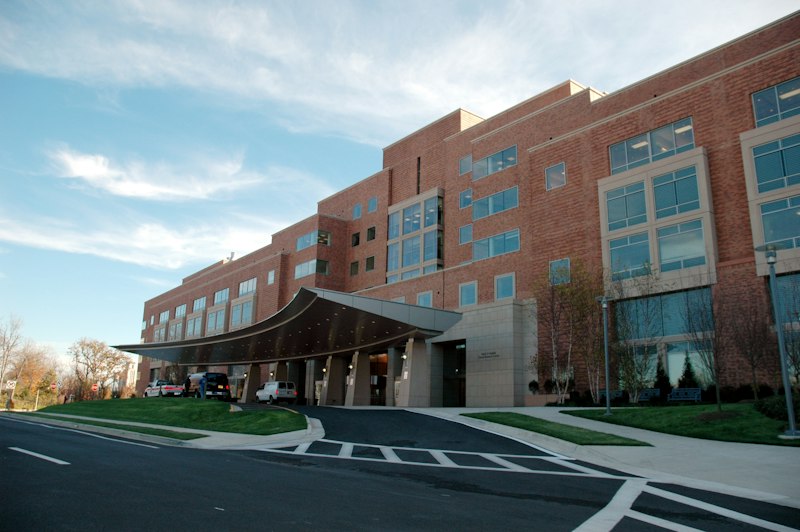
In addition to NHS capital funding, GP practices may be eligible for the Public Sector Decarbonisation Scheme (PSDS), administered by the Department for Energy Security and Net Zero. Practices in NHS Property Services buildings should raise energy efficiency improvement requirements directly with NHSPS, who have their own decarbonisation programme obligations and capital budget. Practices that commission a Retrofit Assessment a formal survey of the building's current energy performance and a costed improvement pathway are in the strongest position to access available funding, whether from NHS England, NHSPS, or national government schemes.
Releted Tags

Related Post
GP Surgery Refurbishment: The Complete Guide for Practice Managers (2025)
A GP surgery refurbishment is one of the largest capital decisions a practice will face. D…
GP Surgery Premises Management: What It Covers, Why It Matters, and How to Get It Right
Half of GP practices in England are already operating from premises that do not meet their…
Surgery Premises Group
Surgery Premises Group specialises in property management, compliance, and refurbishment for GP surgeries and dental practices across the UK. Our team writes on CQC compliance, statutory risk assessments, and clinical premises renovation to help practice managers keep their buildings safe, compliant, and fit for patient care.